



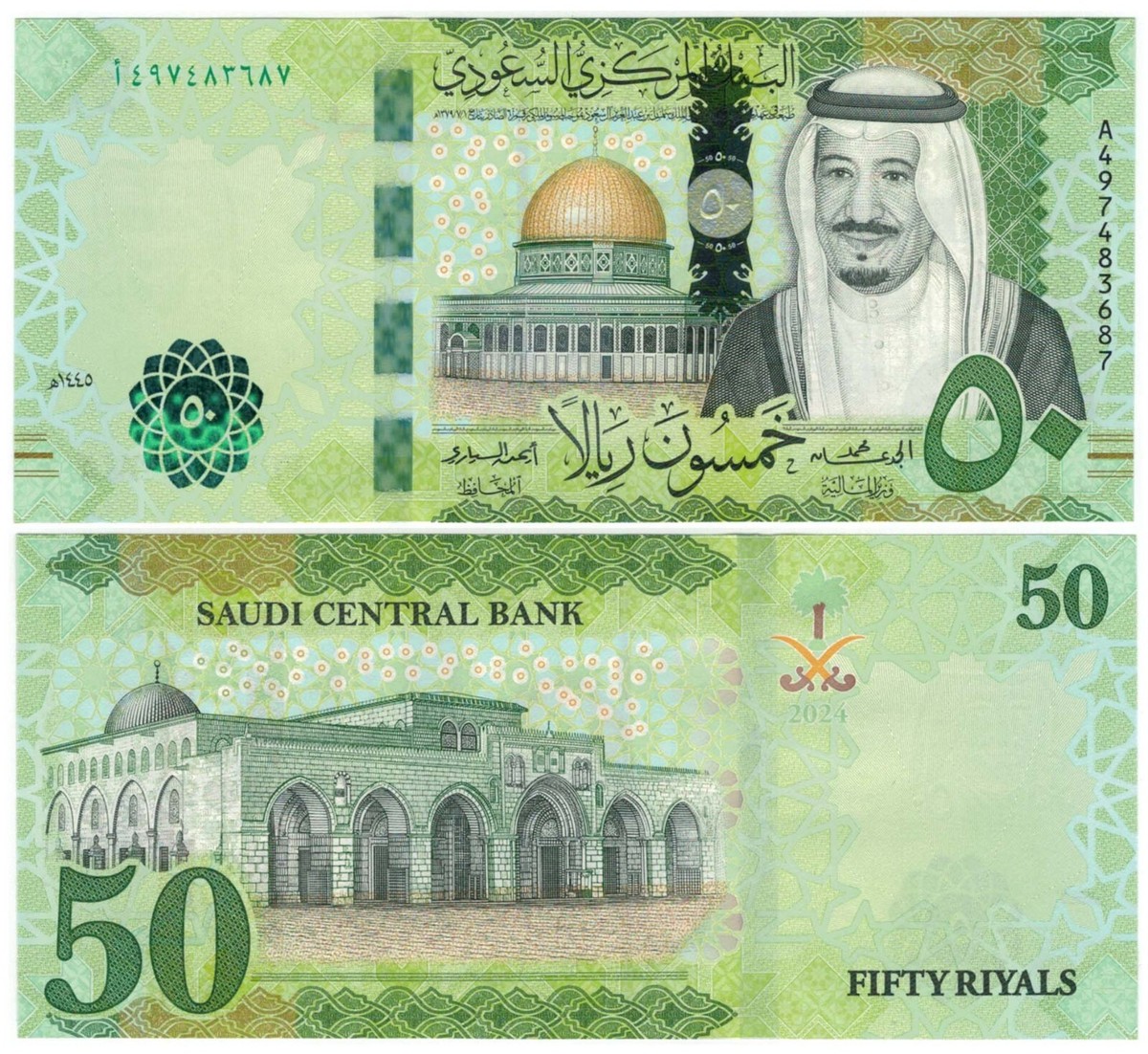
Saudi Riyal (SAR) is the official currency of Saudi Arabia.
In Pakistan, when people say “riyal”, they usually mean Saudi riyal (SAR).
Rates change daily.
This guide explains what Saudi riyal means, why its PKR value differs across banks and exchanges, and how to avoid common mistakes (buying vs selling, spread, and fees).
Quick facts (Saudi Riyal)
- Currency name: Saudi riyal
- Currency code: SAR
- Country: Saudi Arabia
- Where you’ll see SAR: bank apps, remittance receipts, exchange boards, travel spending
- What matters in Pakistan: the rate you get depends on buying vs selling, bank vs exchange, and fees
What Is the Saudi Riyal (SAR)?
SAR is the official currency of Saudi Arabia, and the term “SAR” is commonly used as the short form or code representing the Saudi Riyal in financial and money-related contexts.
The Saudi Riyal is the legal tender of Saudi Arabia and is used for all domestic financial transactions.
Its international currency code is SAR, which is used by banks, financial systems, and global payment networks.
The Saudi Riyal is commonly used for:
- Salaries and wages in Saudi Arabia
- Local commerce and services
- Remittances sent by overseas workers
- Travel, religious tourism, and daily expenses
The currency is issued and regulated by Saudi Arabia’s central monetary authority, ensuring consistency and stability.
Saudi Riyal Symbol and Denominations
The updated symbol of the Saudi Riyal is . The symbol, inspired by Arabic calligraphy, was approved by King Salman on February 20, 2025, to enhance the currency’s national and global identity. It is divided into smaller units called Halala, where 1 Saudi Riyal equals 100 Halala.
In practical daily use, most transactions are carried out using Riyal banknotes, while Halala coins are used less frequently due to inflation and rounding in retail prices. Commonly used banknotes include 5, 10, 50, 100, and 500 Riyals, which are widely used for salaries, shopping, and services across Saudi Arabia.
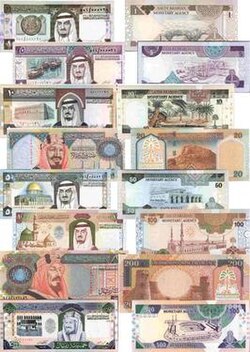
History of the Saudi Riyal
The Saudi Riyal emerged as a unified national currency alongside the formation of modern Saudi Arabia in the early 20th century. Before standardization, various silver-based currencies circulated in the region, reflecting trade practices rather than a centralized monetary system.
As the Saudi state consolidated, the Riyal was formally adopted and gradually modernized to support governance, trade, and economic expansion. Over time, consistent monetary discipline and strong economic backing helped establish the Saudi Riyal as a stable and trusted regional currency.
Saudi riyal meaning in money (SAR explained)
SAR is the short code used in banking and finance for the Saudi riyal.
So if you see SAR on a bank statement, transfer app, or exchange board, it means the amount is in Saudi riyals.
A quick way to remember it:
- Saudi riyal = the name people say
- SAR = the code systems use
Who Controls the Saudi Riyal?
The Saudi Riyal is issued and managed by the Saudi Central Bank.
Its responsibilities include:
- Issuing banknotes and coins
- Managing monetary policy
- Maintaining currency stability
- Supervising the banking and financial system
Strong institutional control has played a key role in maintaining long-term confidence in the Saudi currency system.
Why Is the Saudi Riyal Pegged to the US Dollar?
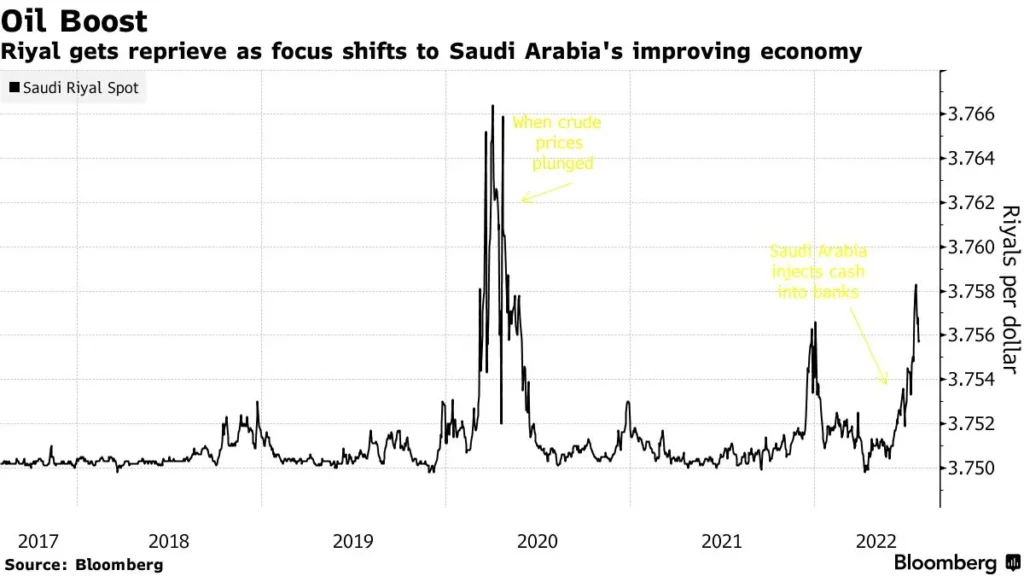
One of the defining features of the Saudi Riyal is that it operates under a fixed exchange rate system, meaning it is pegged to the US Dollar.
Under this system, the Saudi Riyal has been maintained at an approximate fixed rate of 3.75 SAR per US Dollar, a level that has remained unchanged for decades and forms the foundation of the currency’s long-term stability.
Saudi Arabia follows this approach because:
- Oil exports are priced in US Dollars
- A fixed rate reduces currency volatility
- Predictability supports trade, budgeting, and investment
This peg is a major reason the Saudi Riyal is considered stable and predictable, especially compared to freely floating currencies.
Importance of Saudi Riyal for Pakistan
The importance of the Saudi Riyal for Pakistan is closely tied to overseas employment and economic links between the two countries.
Saudi Arabia hosts one of the largest Pakistani expatriate communities. As a result:
- Salaries earned in Saudi Riyals support millions of families in Pakistan
- The currency plays a major role in household income stability
- Economic conditions in Saudi Arabia directly affect remittance inflows
For many Pakistanis, the Saudi Riyal is not just a foreign currency — it is directly connected to livelihoods and family support.
Saudi riyal value in Pakistan (why the PKR amount differs)
A common surprise is this: the “Saudi riyal rate” is not always one single number.
Your final PKR can change because of:
- Buying vs selling rate (two different sides of the board)
- Bank vs exchange pricing
- Spread (the built-in difference between buy and sell)
- Fees / service charges (especially on transfers or small cash exchanges)
- City and timing (rates can vary by location and time of day)
Example:
If one place shows 1 SAR = 75 PKR (example) and another shows 1 SAR = 76 PKR (example), that doesn’t automatically mean one is “wrong.”
It usually means they’re using a different side (buy/sell) or adding different costs and margin.
Practical tip:
Before exchanging, ask: “Is this buying or selling?” and “Any charges?”
That one question saves most people money.
How to convert SAR to PKR (simple formula)
You can convert any amount using this basic math:
PKR = SAR × rate
Example (not a live rate):
If 1 SAR = 75 PKR (example):
- 100 SAR ≈ 7,500 PKR (example)
- 500 SAR ≈ 37,500 PKR (example)
Use this only to understand the calculation.
For today’s exact rate, check your bank app or a licensed exchange board.
Saudi Riyal and Remittances to Pakistan
The Saudi Riyal remittance flow to Pakistan is among the largest sources of foreign income for the country.
These remittances:
- Support household spending
- Improve foreign currency inflows
- Contribute to broader economic stability
In recent years, the shift toward formal and digital remittance channels has increased transparency and reliability, benefiting both senders and recipients while strengthening official financial flows.
Saudi Riyal Compared to Other Major Currencies
Unlike freely floating currencies that react sharply to speculation and market sentiment, the Saudi Riyal operates under a fixed exchange framework. This significantly reduces volatility and makes the currency more predictable for workers, businesses, and remittance senders.
This stability is particularly valuable for overseas workers who depend on consistent income value rather than short-term currency movements.
Final Thoughts
Saudi riyal = SAR, the currency of Saudi Arabia.
In Pakistan, the PKR you receive can differ due to buying vs selling, bank vs exchange, and fees—so always confirm the final PKR amount before you exchange.
What is Saudi Riyal (SAR)?
The Saudi Riyal is the official currency of Saudi Arabia and is used for all financial transactions within the country.
Why is Saudi Riyal important for Pakistanis?
Because millions of Pakistanis work in Saudi Arabia and send money home in Saudi Riyals, making it a key currency for household income.
Is the Saudi Riyal a stable currency?
Yes. Its stability comes from strong economic backing and its fixed peg to the US Dollar.
Why is the Saudi Riyal pegged to the US Dollar?
The peg supports stability, aligns with oil trade pricing, and reduces currency volatility.
What does SAR mean in money?
SAR is the currency code used to represent the Saudi Riyal, which is the official currency of Saudi Arabia.