



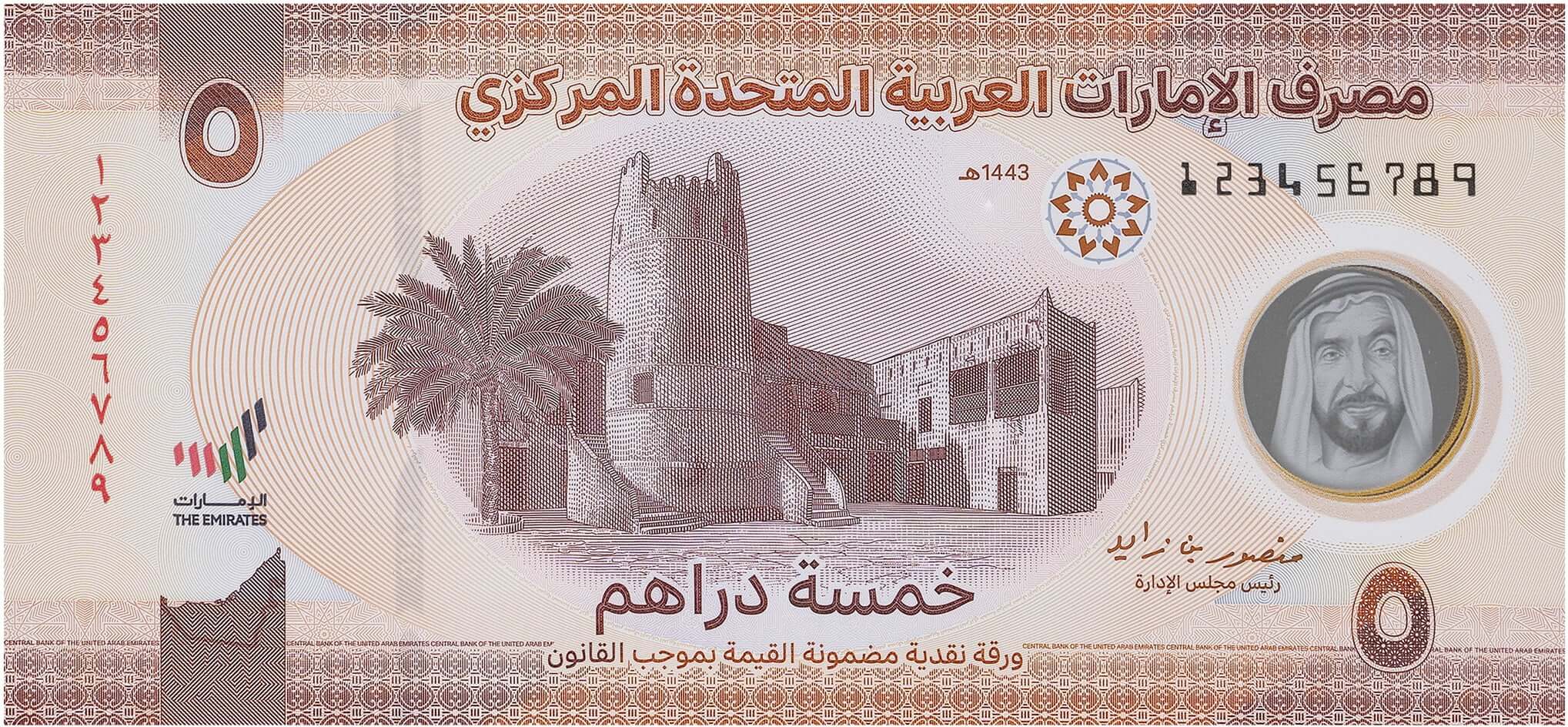
The UAE Dirham (AED) is the official currency of the United Arab Emirates and one of the most widely used foreign currencies by Pakistanis. With a large Pakistani population living and working in the UAE, the Dirham plays an important role in salaries, remittances, trade, and travel between the two countries.
This article explains what the UAE Dirham is, how it developed, how it is managed, and why it is especially important for Pakistan, without discussing exchange rates or conversions.
What Is the UAE Dirham (AED)?
The UAE Dirham is the legal tender of the United Arab Emirates and is used for all financial transactions within the country.
Its international currency code is AED, which is used by banks, payment systems, and financial institutions worldwide.
The Dirham is commonly used for:
- Salaries and wages in the UAE
- Business and retail transactions
- Remittances sent by overseas workers
- Travel, tourism, and daily expenses
It serves as the backbone of the UAE’s modern financial system.
UAE Dirham Symbol and Denominations
The symbol of the UAE Dirham is د.إ, and it is divided into smaller units called Fils, where 1 Dirham equals 100 Fils.
In everyday use, most transactions are conducted using Dirham banknotes, while Fils coins are used less frequently. Commonly used banknotes include 5, 10, 20, 50, 100, 200, 500, and 1,000 Dirhams, which are widely accepted across the UAE for salaries, shopping, and services.
History of the UAE Dirham
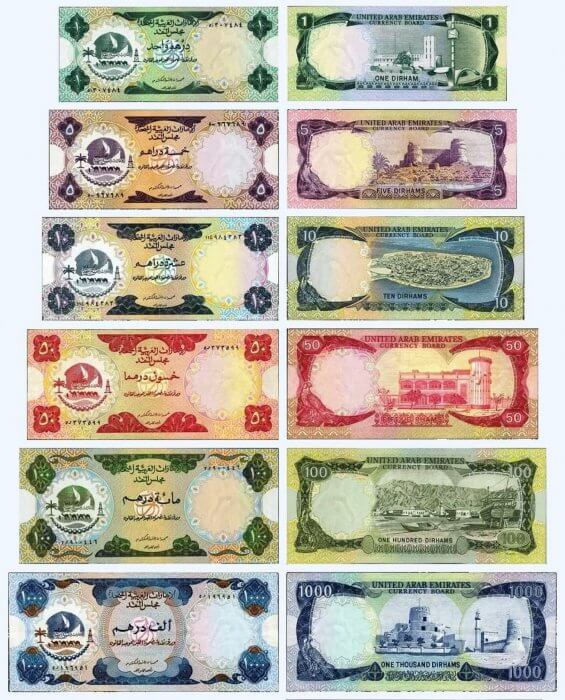
The UAE Dirham was introduced in 1973, shortly after the formation of the United Arab Emirates. Before that, different currencies were used across the region, including the Bahraini Dinar and Qatar–Dubai Riyal.
With the establishment of the UAE, the Dirham was introduced as a unified national currency to support economic integration, trade, and financial stability. Since its introduction, the Dirham has remained a central part of the UAE’s rapid economic growth and modernization.
Who Controls the UAE Dirham?
The UAE Dirham is issued and regulated by the Central Bank of the United Arab Emirates.
Its key responsibilities include:
- Issuing currency notes and coins
- Managing monetary policy
- Maintaining financial and currency stability
- Supervising the banking and financial sector
Strong regulatory oversight has helped maintain confidence in the UAE’s currency system.
Why Is the UAE Dirham Pegged to the US Dollar?
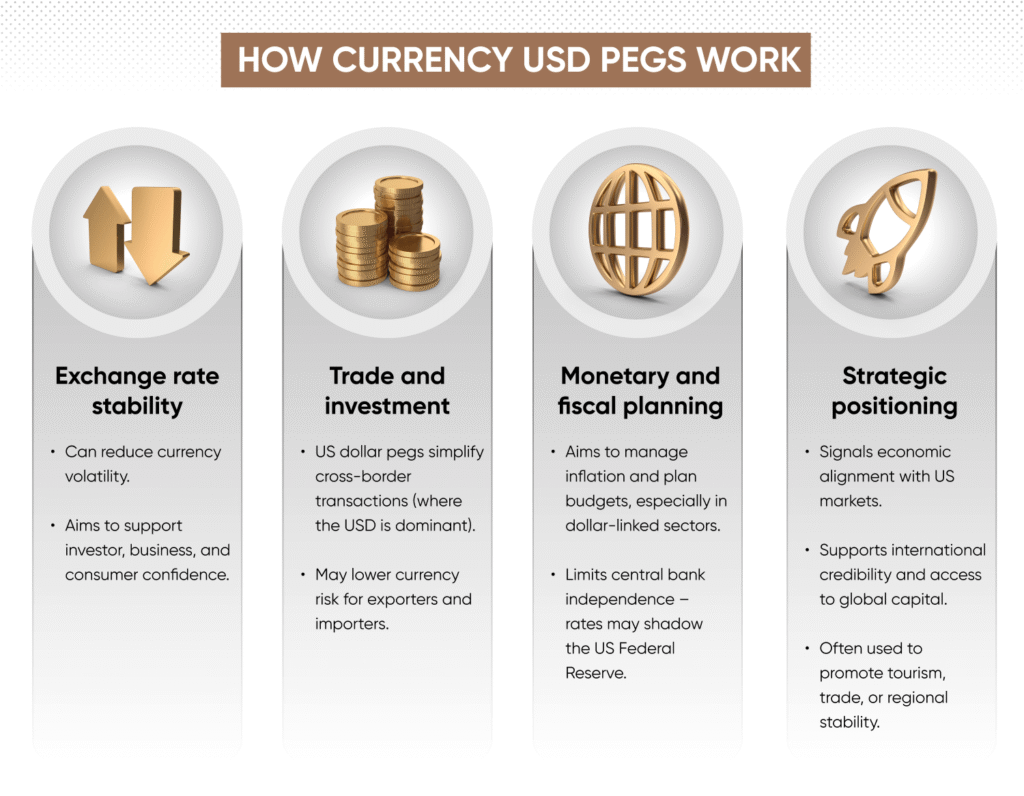
Like the Saudi Riyal, the UAE Dirham operates under a fixed exchange rate system and is pegged to the US Dollar.
Under this system, the Dirham has been maintained at a fixed rate of approximately 3.67 AED per US Dollar, a level that has remained unchanged for decades. This fixed relationship is a key reason behind the Dirham’s long-term stability.
The UAE follows this approach because:
- Oil and energy exports are priced in US Dollars
- A fixed rate reduces currency volatility
- Stability supports trade, investment, and economic planning
This peg makes the Dirham a predictable currency for businesses and overseas workers.
Importance of UAE Dirham for Pakistan
The importance of the UAE Dirham for Pakistan is closely linked to overseas employment and economic ties between the two countries.
The UAE hosts:
- A large Pakistani expatriate community
- Workers across construction, services, logistics, and professional sectors
As a result:
- Salaries earned in Dirhams support millions of families in Pakistan
- The Dirham plays a key role in household income stability
- Economic conditions in the UAE directly affect remittance flows to Pakistan
For many Pakistanis, the Dirham is closely connected to everyday financial security.
UAE Dirham and Remittances to Pakistan
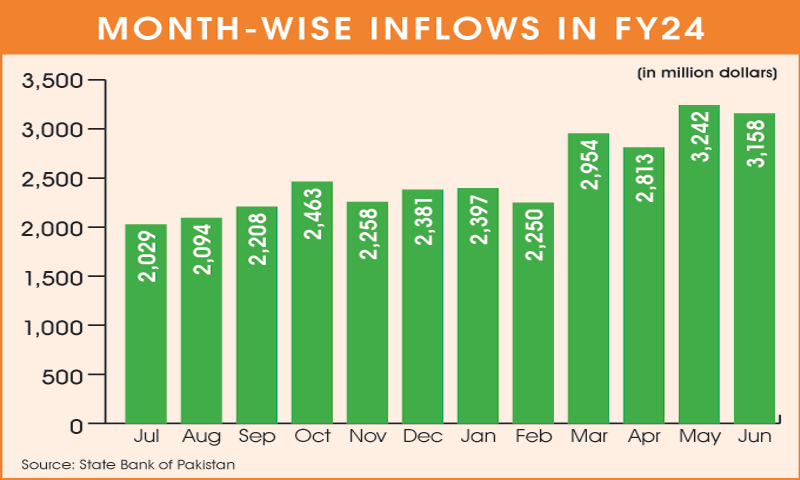
The UAE Dirham remittance flow to Pakistan is among the largest sources of foreign income for the country.
These remittances:
- Support household spending and savings
- Strengthen foreign currency inflows
- Contribute to overall economic stability
The increasing use of formal and digital remittance channels has improved transparency and reliability, benefiting both senders and recipients.
UAE Dirham Compared to Other Major Currencies
Unlike freely floating currencies that fluctuate sharply due to speculation, the UAE Dirham operates within a fixed exchange framework. This reduces volatility and provides predictability, especially for overseas workers and businesses that depend on stable income value.
This stability is one reason the Dirham is widely trusted for long-term employment and remittance planning.
What is the UAE Dirham (AED)?
The UAE Dirham is the official currency of the United Arab Emirates and is used for all domestic financial transactions.
Why is the UAE Dirham important for Pakistanis?
Because a large number of Pakistanis work in the UAE and send remittances home in Dirhams.
Is the UAE Dirham a stable currency?
Yes. Its stability comes from strong economic backing and a fixed peg to the US Dollar.
Why is the UAE Dirham pegged to the US Dollar?
The peg helps maintain stability, supports trade, and reduces exchange-rate volatility.