



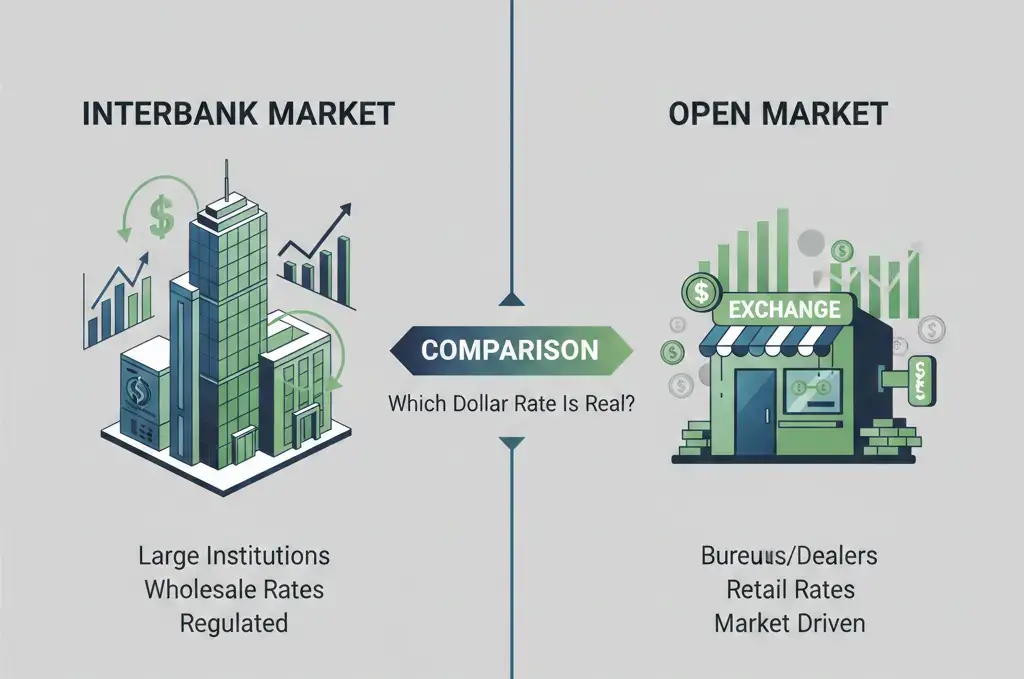
Many people in Pakistan notice that the dollar rate shown by banks is different from the rate quoted by exchange companies. This often leads to confusion and a common question: which dollar rate is correct in Pakistan — interbank or open market?
In 2025, this confusion has increased as currency markets have become more regulated and transparent. This article explains the Interbank vs Open Market Dollar Rate in Pakistan, why both exist, how they are monitored today, and which one actually applies to your situation.
What Is the Interbank Dollar Rate in Pakistan?
The interbank dollar rate is the rate at which banks buy and sell foreign currency among themselves.
It is:
- Used by commercial banks
- Applied to large and official transactions
- Referenced for imports, exports, and financial settlements
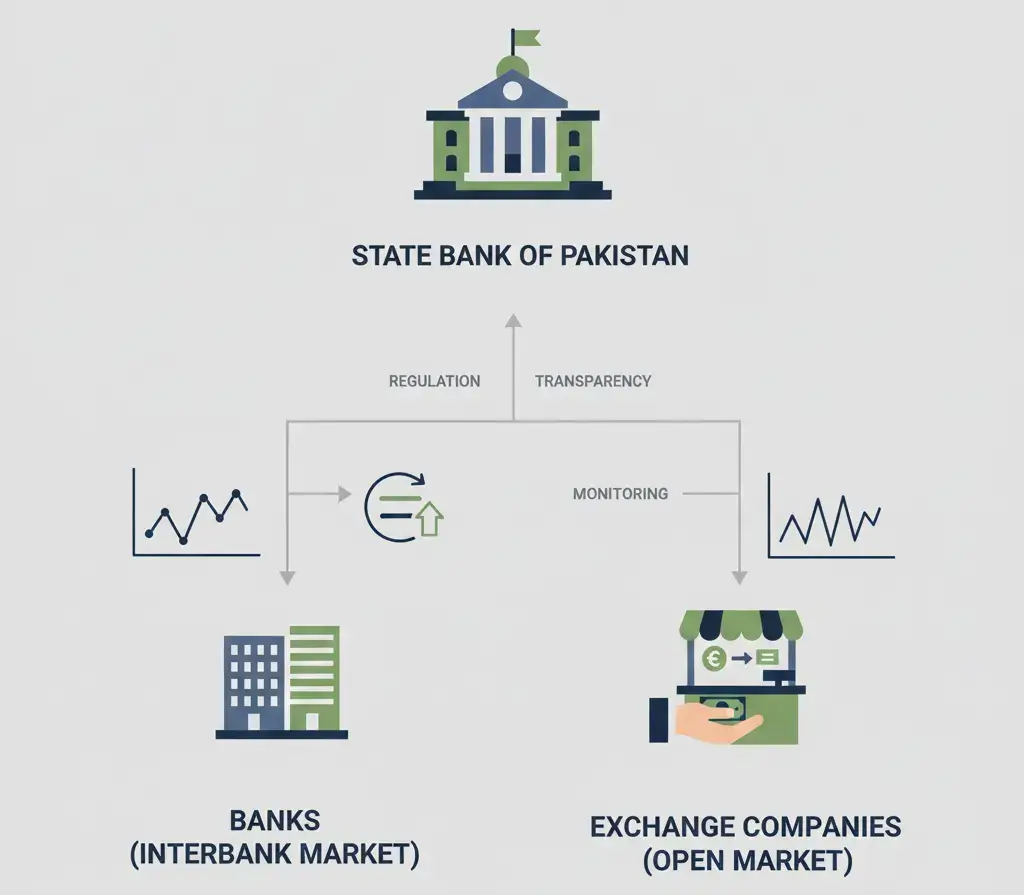
- Closely monitored by the State Bank of Pakistan
In 2025, the interbank market operates under tighter reporting and compliance requirements, making it more transparent than in previous years.
What Is the Open Market Dollar Rate?
The open market dollar rate is the rate offered by:
- Exchange companies
- Authorized money changers
- Retail currency dealers
This rate applies to:
- Individuals buying or selling cash dollars
- Remittance recipients collecting cash
- Travelers and small businesses
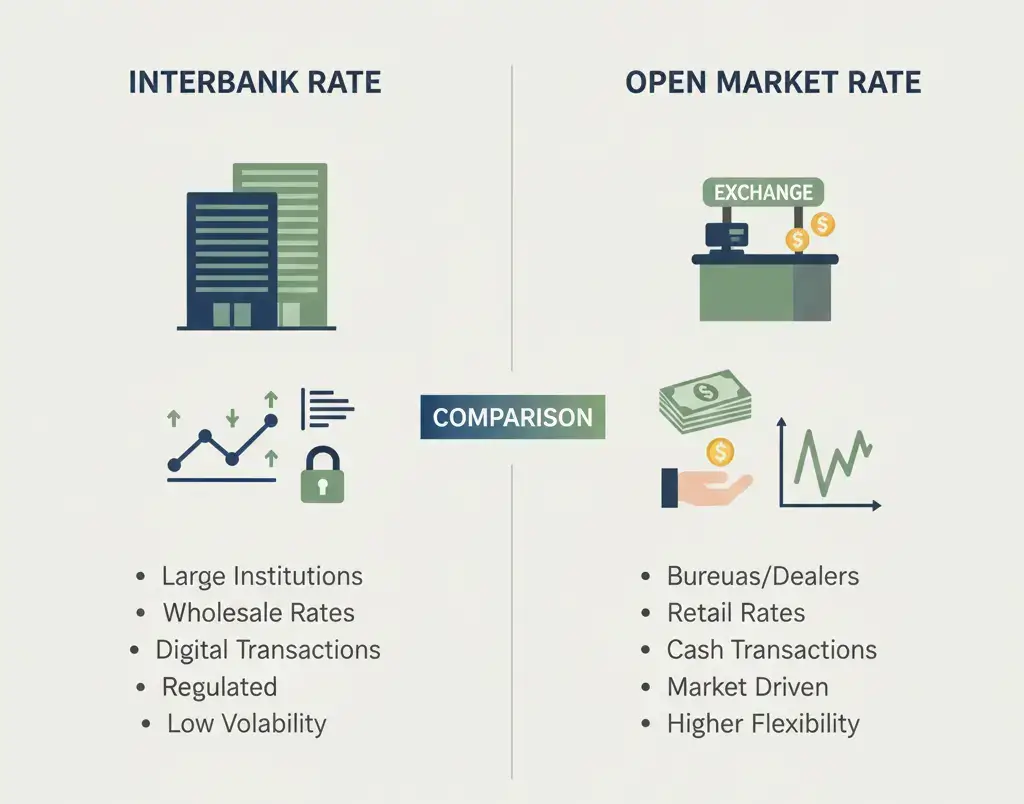
Unlike banks, exchange companies operate in a retail cash market, where prices respond quickly to local demand and supply.
Interbank vs Open Market Dollar Rate – Key Differences
| Aspect | Interbank Rate | Open Market Rate |
| Who uses it | Banks | Exchange companies & public |
| Transaction size | Large / institutional | Small / retail |
| Oversight | Direct SBP monitoring | SBP-regulated but market-driven |
| Volatility | Lower | Higher |
| Public access | Not available | Easily accessible |
These differences explain why both rates can exist at the same time, even on the same day.
Why Is the Dollar Rate Different in Banks and Exchange Companies?
The gap exists because banks and exchange companies serve different segments of the market.
Key reasons include:
- Retail demand for physical dollars
- Seasonal pressure (travel, imports, remittances)
- Cash availability in the open market
- Short-term market expectations
In 2025, the SBP has increased monitoring of exchange companies to discourage artificial shortages and speculative pricing, but it still allows market-based pricing within legal boundaries.
Which Dollar Rate Is Correct in Pakistan?
The simple answer is: both are correct — depending on who you are.
Interbank rate is correct for:
Bank transactions
Trade settlements
Corporate and institutional use
Open market rate is correct for:
Individuals buying or selling cash
Retail currency exchange
Remittance cash payouts
Confusion happens when people expect a retail cash rate to match a bank-only rate.
Who Decides the Dollar Rate in Pakistan?
No single authority fixes the dollar rate.
Instead:
- The interbank rate is shaped by bank-to-bank trading under SBP oversight
- The open market rate is shaped by retail demand and supply
In 2025, the SBP’s role is:
- Ensuring lawful transactions
- Reducing excessive spreads
- Preventing illegal market practices
The goal is stability and transparency, not price fixing.
Why Does the Open Market Rate Often Appear Higher?
The open market rate usually includes:
- Cash handling and operational costs
- Immediate liquidity demand
- Risk premiums during uncertainty
Because exchange companies react faster to retail pressure, the open market rate often moves before the interbank rate during periods of stress or high demand, even during periods of overall stability.
Does a Higher Open Market Rate Mean the Rupee Is Weakening?
Not always.
A short-term gap between rates often reflects:
- Temporary cash demand
- Seasonal factors
- Market psychology
Long-term currency direction depends on:
- Foreign exchange reserves
- Trade and current account position
- Remittance inflows
- Overall economic confidence
How This Difference Affects Everyday People
For individuals:
- Banks usually do not sell dollars at interbank rates
- Exchange companies reflect the true retail price
This is especially relevant for overseas Pakistanis sending money from Gulf countries.
For businesses:
- Importers focus on interbank trends
- Cash exposure is managed through open market pricing
Understanding this difference helps people avoid panic and misinformation, especially during volatile periods.
Final Thoughts
The difference between interbank and open market dollar rates in Pakistan reflects how two regulated markets serve different users.
In 2025, stronger oversight and improved transparency have reduced extreme gaps, but price differences still exist due to real-world demand dynamics. Understanding this distinction allows individuals and businesses to interpret dollar movements accurately — without fear or speculation.
Which dollar rate should I follow in Pakistan?
Use the open market rate for cash transactions and the interbank rate for bank or trade-related dealings.
Why does the open market rate change faster?
Because it reacts immediately to retail demand, cash availability, and sentiment.
Can interbank and open market rates become equal?
They can move close during stable periods, but they rarely remain identical.
Is a higher open market rate illegal?
No, as long as exchange companies operate within SBP regulations.



These differences explain why two exchange rates can exist at the same time.