



If you’ve ever checked a currency rate board and wondered why there are two different prices for the same currency, you’ve already met the idea of exchange rate spread.
This guide explains what the spread is, why it exists, when it becomes wider, and how you can judge whether a quote looks fair — using simple examples in PKR.
Exchange rate spread
Exchange rate spread is the difference between the rate you can buy a currency at and the rate you can sell it at.
A quick PKR example (numbers are only for understanding):
- You buy 1 USD at ₨280
- You sell 1 USD at ₨275
- Spread = ₨5 per USD
That ₨5 gap is the “spread”.
New to reading rate boards? Start here: How to Read Currency Exchange Rates (our existing guide) — then come back to this spread explanation.
Buying vs selling rate difference
The two rates are not a mistake — they represent two different directions:
- Buying rate: the rate they will pay you when they buy foreign currency from you
- Selling rate: the rate you pay them when you buy foreign currency from them
So the “buying vs selling rate difference” is simply the space between those two prices.
A simple way to remember it:
- If you’re buying foreign currency, you’ll get the higher rate (selling rate)
- If you’re selling foreign currency, you’ll get the lower rate (buying rate)
Why is the spread in currency exchange there?
Spread exists for practical reasons. A currency exchange business isn’t just “passing rates along” — it’s handling real costs and real risk.
Here are the most common reasons:
- Business costs
Rent, staff, security, systems, and day-to-day operations all cost money. - Rate-move risk (buffer)
Rates can move while they are holding cash. Spread helps them absorb small price changes. - Supply and demand for cash currency
If many people suddenly want USD cash, the selling side gets more expensive. If many people bring USD to sell, the buying side can change too. - Handling and compliance
Cash verification, record-keeping, and compliance requirements add costs. - Profit margin
At the end of the day, spread is also how many exchanges earn.
The key point: Spread is normal. What matters is whether it looks reasonable for the situation.
When is exchange rate spread higher?
Spread usually becomes wider when the exchange is taking on more risk or cost, or when the market is less smooth.
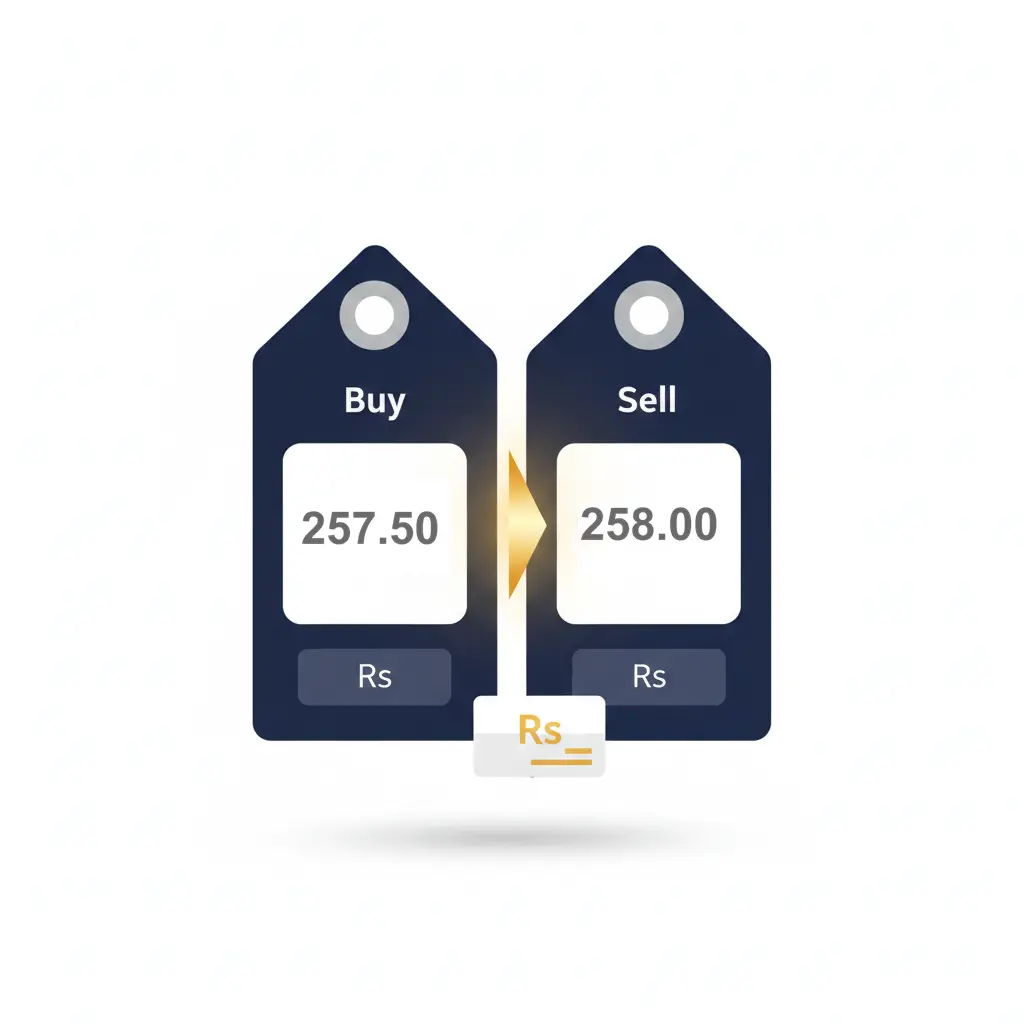
Common times you’ll notice a bigger spread:
- Weekends / after-hours (less market activity, more uncertainty)
- Low liquidity (less common currencies, smaller branches)
- High uncertainty periods (prices move faster, businesses protect themselves)
- Very small transactions (some places widen margins on tiny amounts)
- High-convenience locations (airports or premium areas may charge a “convenience premium”)
Bank vs exchange company spread — who is usually cheaper?
People often ask whether banks or exchange companies offer better rates. The honest answer is: it depends on what you’re doing.
Banks can be better when:
- Your transaction is linked to accounts, cards, transfers, or official banking channels
- You prefer more documentation and a standardized process
Exchange companies can be better when:
- You need cash currency quickly
- You want to compare a few counters and pick the best quote
The spread you get is often decided by:
- Cash vs transfer (cash can carry extra handling costs)
- Amount (larger amounts sometimes get better pricing)
- City/branch conditions (local demand affects the quote)
How to calculate exchange rate spread (2 easy ways)
You don’t need finance knowledge to calculate spread. Two simple methods are enough.
Method 1: Difference in PKR (most practical)
Spread = Selling rate − Buying rate
Example:
- Selling: ₨280
- Buying: ₨275
- Spread: ₨5
Method 2: Spread as a percentage (optional)
This helps when you want to compare across currencies.
Spread % = (Spread ÷ Selling rate) × 100
Example:
- Spread: 5
- Selling: 280
- Spread % = (5 ÷ 280) × 100 = 1.78% (approx.)
Use this when comparing two places that quote different numbers.
What is a “good” spread in money exchange?
There isn’t one perfect number that fits every situation, because spread changes with:
- currency type (major vs less common)
- transaction type (cash vs transfer)
- timing and location
- amount
A practical rule that works well:
- Major currencies typically have tighter spreads
- If the spread looks unusually wide, compare 2–3 reputable places before you exchange
Also watch for “rate tricks” that confuse people:
- a good board rate, but an extra service fee later
- a different rate for older notes / worn notes
- confusion about direction (people mix up buying vs selling)
If you’re unsure, ask one clear question before handing over money:
“This is the final rate I will receive/pay, right?”
The “1.25% Rule” As part of Pakistan’s ongoing economic reforms, the State Bank (SBP) and IMF have targeted an average premium (spread) of no more than 1.25% between the interbank and open market rates.
The “Digital Discount” (Raast Integration) In January 2026, the SBP allowed Exchange Companies to use the Raast payment system for remittances.
How to avoid paying a high currency exchange spread
You don’t need to chase tiny differences daily. Just avoid the common traps.
- Compare before you go (even two quotes helps)
- Avoid high-convenience counters if you can (airports, premium spots)
- If safe and practical, exchange once instead of multiple small exchanges
- Use reputable banks/exchanges and ask the final rate clearly
- Keep the receipt so you can confirm what you agreed to
Is spread a fee or a profit?
Spread can include both. It covers costs and risk, and it’s also part of how the business earns. Some places add a separate service fee too.
What does “bid-ask spread” mean in currency?
It’s the same idea. Bid is what they pay you (buying rate). Ask is what you pay them (selling rate). The gap is the spread.
Why do two exchanges quote different spreads?
Because their costs, cash availability, risk tolerance, and local demand can be different — even in the same city.
Is spread the same as commission?
Not always. Spread is built into the two rates. Commission is an extra fee on top (some places charge it, others don’t).
Does spread change during the day?
Yes, it can. Spreads may tighten or widen as demand changes and as businesses react to the market.
Final Thought
Exchange rate spread is simply the gap between the buying and selling rate. It’s normal — and once you understand it, you can quickly judge whether a quote makes sense, compare options calmly, and avoid paying more than you need to.