



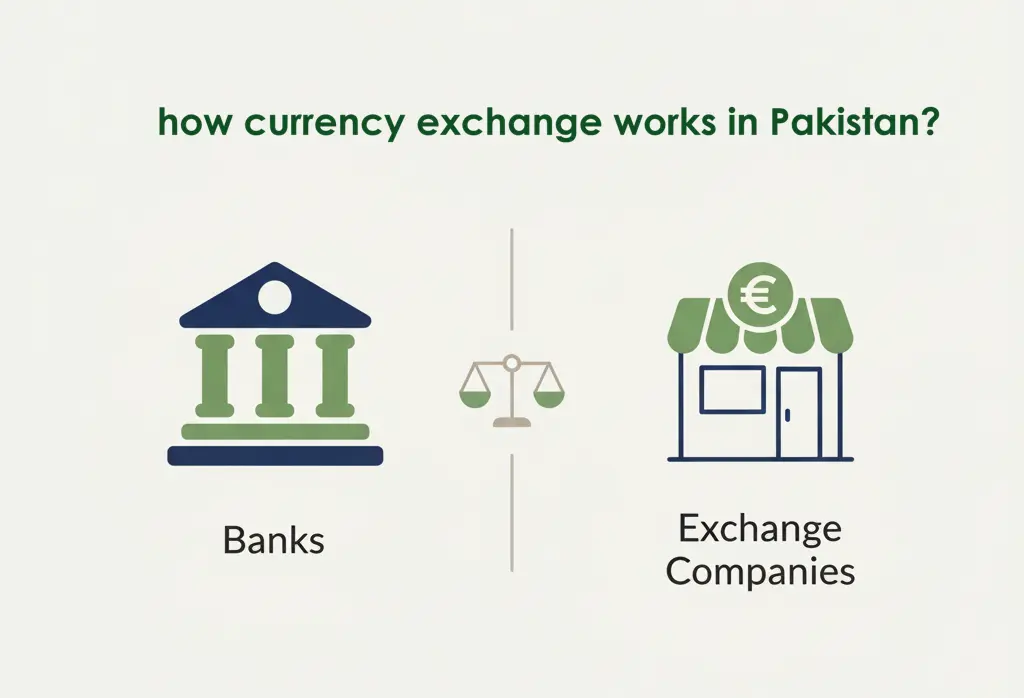
Many people in Pakistan notice that banks and exchange companies offer different currency rates, which often leads to confusion. Some assume banks are cheaper, others believe exchange companies manipulate prices. In reality, both operate under different systems, serving different users.
This guide explains how currency exchange works in Pakistan, the role of banks and exchange companies, and why price differences exist — in simple, practical terms.
What Is Currency Exchange?
Currency exchange is the process of buying or selling one currency in exchange for another. It allows individuals, businesses, and governments to trade, travel, send money, and settle international payments.
In everyday life, this means:
- Exchanging Pakistani Rupees for foreign currency
- Receiving foreign money through remittances
- Paying for imports or overseas services
How Currency Exchange Works in Pakistan
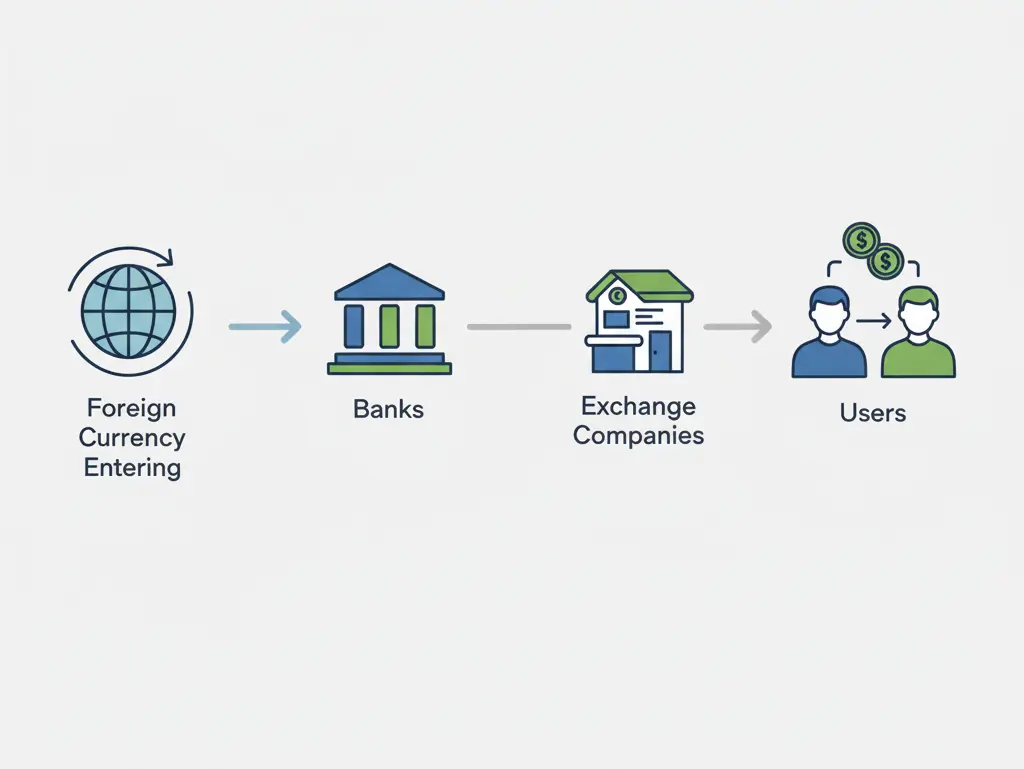
The currency exchange system in Pakistan operates through two regulated channels: banks and exchange companies.
Here’s how the process works in simple steps:
- Foreign currency enters Pakistan through trade, remittances, and investments
- Banks and exchange companies access foreign currency through approved channels
- Exchange rates are shaped by demand and supply
- Regulatory oversight ensures legal and transparent operations
This structure allows the market to function without a single fixed price for all users.
Role of Banks in Currency Exchange
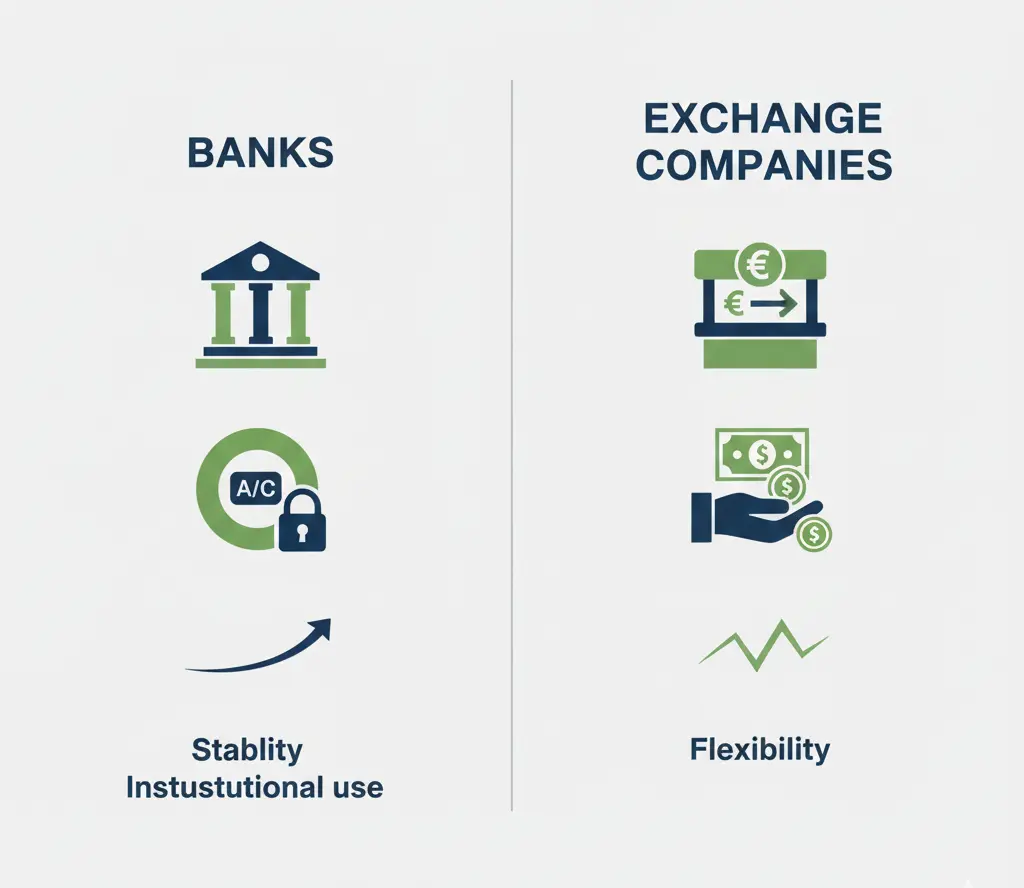
Banks primarily handle institutional and non-cash transactions.
They are used for:
- Imports and exports
- Corporate payments
- International transfers
- Account-based foreign currency dealings
Bank exchange rates tend to be more stable because transactions are digital, large-scale, and less influenced by sudden retail demand.
Role of Exchange Companies in Pakistan
Exchange companies operate in the retail currency market.
They mainly serve:
- Individuals buying or selling cash
- Travelers
- Overseas remittance recipients
- Small businesses
Because they deal with physical currency, exchange companies respond quickly to changes in demand, which can cause faster price movement.
Banks vs Exchange Companies – Key Differences
| Aspect | Banks | Exchange Companies |
| Type of transactions | Account-based | Cash-based |
| Target users | Businesses & institutions | General public |
| Rate flexibility | Lower | Higher |
| Reaction speed | Slower | Faster |
| Accessibility | Limited to account holders | Widely accessible |
These differences explain why two exchange rates can exist at the same time.
Why Bank and Exchange Company Rates Are Different
The difference is not manipulation — it’s structural.
Key reasons include:
- Cash availability in the open market
- Retail demand pressure
- Operational and handling costs
- Speed of market response
Banks operate in a controlled environment, while exchange companies reflect real-time retail demand. In stable periods, these differences tend to narrow rather than disappear.
Who Regulates Currency Exchange in Pakistan?
Currency exchange activities are regulated by the State Bank of Pakistan.
Its role includes:
- Licensing banks and exchange companies
- Monitoring transactions
- Preventing illegal practices
- Ensuring transparency
The regulator oversees the system, but does not fix daily exchange prices.
How This System Affects Everyday People
For individuals:
- Banks usually do not sell foreign currency at interbank rates
- Exchange companies reflect the true retail price
For overseas Pakistanis:
- Cash demand and remittances influence open market pricing
- Gulf currencies play a major role in daily exchange activity
Understanding this system helps people make informed decisions instead of reacting to rumors.
Common Misconceptions About Currency Exchange
- “Banks always offer the best rates”
Not for cash transactions. - “Only one exchange rate should exist”
Different markets serve different needs. - “Higher retail rates mean economic collapse”
Short-term gaps often reflect demand, not fundamentals.
Final Thoughts
The currency exchange system in Pakistan is structured, regulated, and market-driven. Banks and exchange companies serve different users, which naturally leads to different pricing behavior. Once you understand how the system works, exchange rate movements become easier to interpret — without confusion or unnecessary concern.
How does currency exchange work in Pakistan?
Currency exchange works through banks and exchange companies, with prices shaped by demand, supply, and regulatory oversight.
Why are bank and exchange company rates different?
Because banks handle institutional transactions while exchange companies operate in the retail cash market.
Who controls currency exchange in Pakistan?
The State Bank of Pakistan regulates the system but does not set daily prices.
Which rate should individuals follow?
Individuals buying or selling cash usually follow exchange company rates.