




Remittances play a crucial role in Pakistan’s economy, supporting millions of households and providing a steady inflow of foreign currency. Beyond helping families, remittances also influence how the currency market behaves. Understanding how remittances affect exchange rates in Pakistan helps explain why currency pressure eases at certain times and increases at others.
This article explains the connection in clear, practical terms—without relying on daily rates or short-term market noise.
What Are Remittances?
Remittances are funds sent by people working abroad to their families or beneficiaries in their home country. In Pakistan, these transfers mainly come from overseas Pakistanis living in countries such as the UK, Saudi Arabia, and the UAE.
These funds are typically sent through banks, exchange companies, or formal money transfer channels and are used for daily expenses, education, healthcare, and savings.
Why Remittances Are Important for Pakistan
Remittances are one of Pakistan’s most reliable sources of foreign income. They help:
- Support household consumption across the country
- Reduce pressure on public finances
- Improve overall economic stability
Because remittances arrive regularly and are spread across many households, they provide a level of resilience that other income sources often do not.
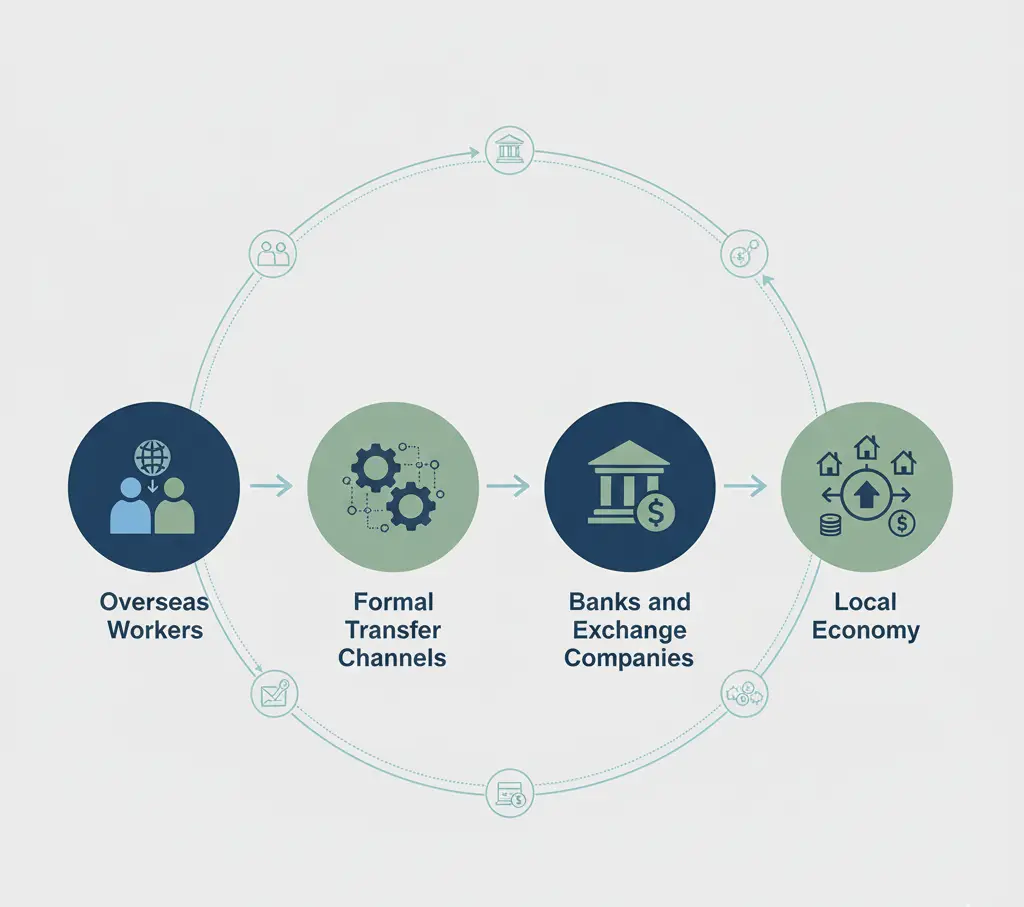
How Remittances Enter the Currency System
Remittances affect the currency market through a clear process:
- Overseas Pakistanis send foreign currency to Pakistan
- Banks and exchange companies receive these funds
- The foreign currency becomes available within the financial system
- Increased availability helps meet demand for foreign exchange
This flow directly influences how much foreign currency is available at any given time.
How Remittances Affect Exchange Rates
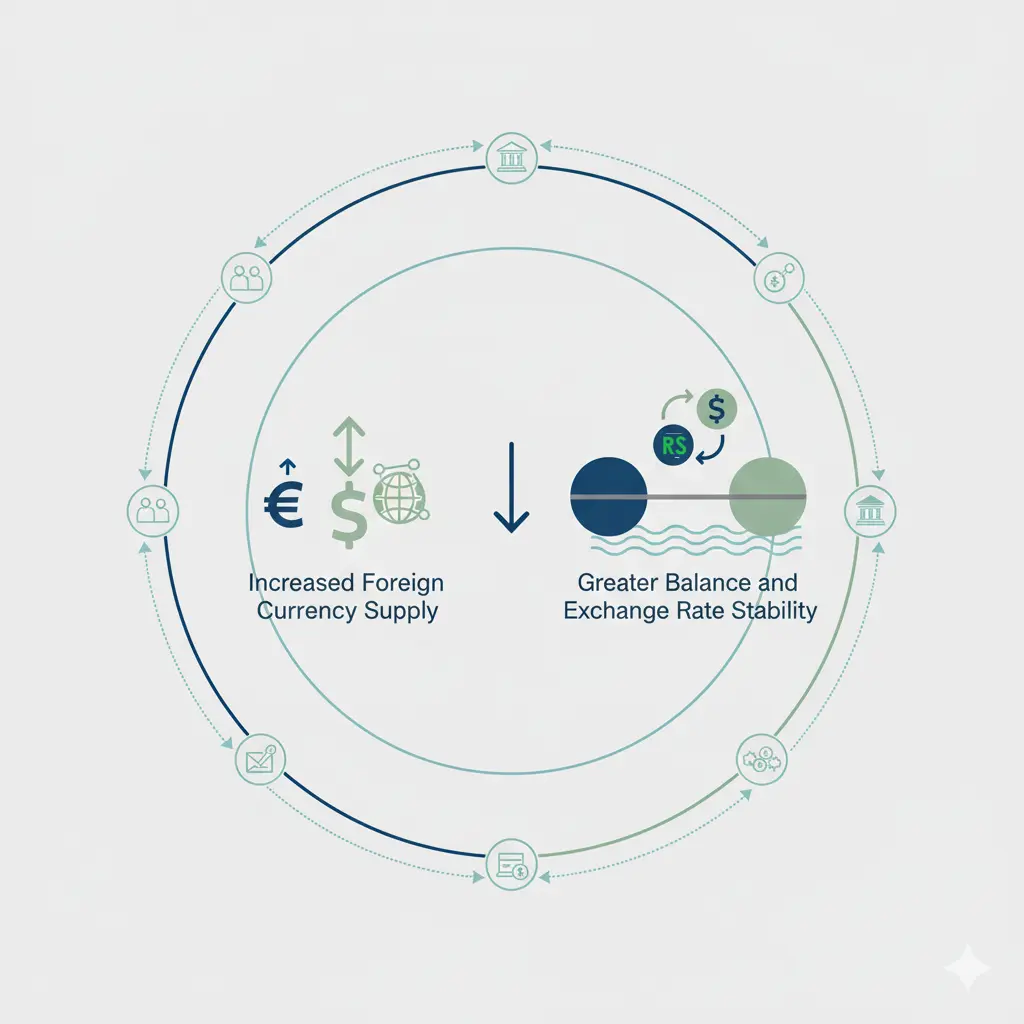
The impact of remittances on exchange rates comes down to supply and demand.
When remittance inflows increase:
- More foreign currency becomes available
- Pressure on the local currency is reduced
- Sudden spikes in demand are easier to absorb
When inflows slow:
- Foreign currency supply tightens
- Market pressure can increase
- Exchange rates may become more volatile
In simple terms, steady remittances help smooth out currency fluctuations. These inflows also influence how different market segments respond to currency demand.
Do Higher Remittances Strengthen the Local Currency?
Higher remittances can support currency stability, but they do not control exchange rates on their own.
Remittances:
- Help reduce extreme pressure
- Improve short-term market balance
- Support confidence
However, long-term exchange rate trends also depend on trade flows, investment, and overall economic conditions. Remittances are a stabilizing force, not a guarantee of appreciation.
Remittances and Market Confidence
Consistent remittance inflows improve confidence in the currency system. When markets expect regular foreign currency inflows:
- Panic-driven demand decreases
- Speculation is reduced
- Volatility becomes more manageable
This confidence effect is often as important as the actual volume of remittances entering the system.
Role of Banks and Exchange Companies in Remittances
Banks and exchange companies act as the bridge between overseas earnings and the local economy.
- Banks handle account-based remittances and large transfers
- Exchange companies distribute funds to individuals, especially in cash-based transactions
Efficient processing through these channels ensures remittances reach the market smoothly and contribute effectively to currency availability.
Oversight by the State Bank of Pakistan helps ensure that remittance flows remain transparent and properly integrated into the financial system.
Common Misconceptions About Remittances and Exchange Rates
- “Remittances alone fix the exchange rate”
Remittances help stability but do not replace broader economic factors. - “More remittances always mean a stronger currency”
They reduce pressure, but long-term trends depend on multiple forces. - “Remittances directly control market prices”
They influence supply, not daily pricing decisions.
Final Thoughts
Remittances play a stabilizing role in Pakistan’s exchange rate system by ensuring a steady flow of foreign currency into the economy. While they do not determine exchange rates on their own, they help reduce volatility and improve market confidence.
Understanding this relationship allows readers to interpret currency movements more calmly—without reacting to short-term fluctuations or speculation.
How do remittances affect exchange rates in Pakistan?
Remittances increase foreign currency supply, which helps reduce pressure on exchange rates and supports market stability.
Why are remittances important for Pakistan’s economy?
They support households, provide foreign income, and contribute to overall economic resilience.
Do remittances strengthen the Pakistani Rupee?
They can help stabilize the currency, but long-term strength depends on wider economic conditions.
How do remittances enter the currency market?
They flow through banks and exchange companies, becoming part of the available foreign currency supply.